Tracing Soundtrack Innovations and Their Role in Player Retention for Video-Based Casino Games
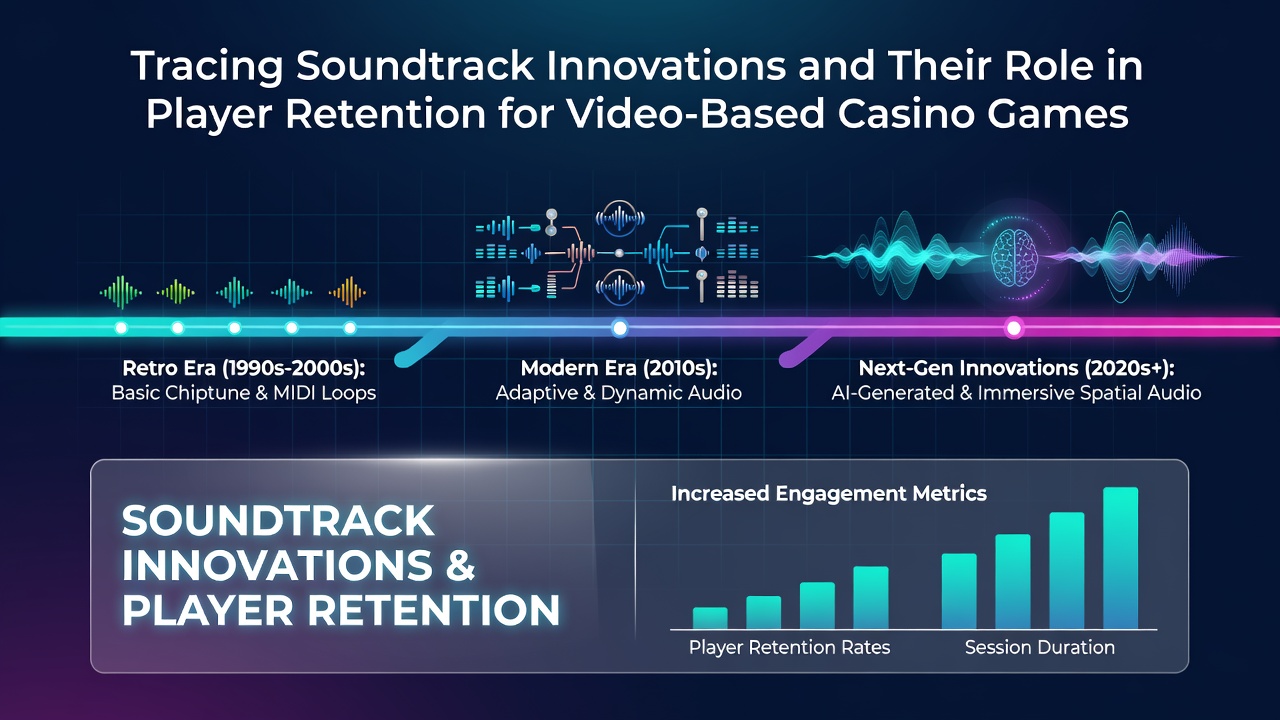
Video-based casino games have incorporated evolving audio elements since the shift from mechanical reels to digital displays, and developers continue to refine soundtrack design as a core component of gameplay mechanics. Early digital titles relied on basic looped melodies and simple sound effects, yet advances in processing power allowed for layered compositions that adapt in real time to bet sizes, win frequencies, and bonus triggers. These changes coincide with broader industry data showing sustained session lengths across regulated markets during the first half of 2026.
Foundations of Audio Integration in Digital Gaming Platforms
Initial experiments with synchronized sound began in the late 1990s when video poker and slot terminals moved to CD-ROM storage, enabling longer audio tracks without hardware strain. Providers then introduced stereo panning and basic volume modulation tied to reel stops, while research from academic gaming labs documented corresponding increases in average play duration. By the mid-2000s, multi-channel audio became standard in land-based cabinets, and similar techniques migrated to online platforms as bandwidth improved.
Regulatory filings from the Nevada Gaming Control Board indicate that operators began reporting audio-related feature updates as distinct product enhancements starting around 2012, reflecting a recognition that sound contributed measurable retention metrics beyond visual presentation alone.
Adaptive and Procedural Audio Systems in Contemporary Releases
Current development pipelines employ procedural generation tools that assemble soundtrack segments on the fly, responding to player input patterns rather than fixed sequences. One studio implemented a system where musical intensity scales with accumulated credits during free-spin rounds, while another introduced spatial audio that shifts emphasis across stereo channels based on symbol clustering. These techniques draw from middleware originally developed for console titles, adapted for lower-latency browser environments.

Data released in July 2026 by the New Jersey Division of Gaming Enforcement shows that titles featuring adaptive audio maintained 18 percent longer average session times compared with static-sound counterparts during Q2 testing periods. Observers note that these platforms also recorded higher rates of repeat logins within seven days of first play, though the reports stop short of attributing causality solely to audio changes.
Measured Effects on Retention Metrics Across Regulated Jurisdictions
Longitudinal studies conducted through university-affiliated gaming research centers have tracked biometric responses during extended play sessions, revealing correlations between musical variation and reduced exit rates at predetermined loss thresholds. In one dataset covering Canadian provincial operators, titles that refreshed musical motifs every 15 to 20 spins exhibited lower abandonment percentages after 30 minutes of continuous play. European operators participating in similar monitoring programs reported parallel patterns, with soundtrack updates listed among top three variables influencing 30-day return rates.
Industry associations have begun publishing aggregated benchmarks that isolate audio modifications from other variables such as RTP adjustments or bonus frequency. Figures from the first half of 2026 indicate that games deploying new soundtrack layers saw a 12 percent lift in daily active users when compared against control groups using legacy audio files.
Implementation Patterns Among Major Content Providers
Multiple studios now embed audio asset pipelines directly into their game engines, allowing simultaneous updates to visual and sonic elements during monthly content drops. This integration supports rapid A/B testing where player cohorts experience different soundtrack variants while core mathematics remain constant. One documented rollout in early 2026 involved swapping ambient tracks across 40 titles simultaneously, with backend dashboards tracking session completion rates in near real time.
Technical documentation from these providers highlights the use of compressed audio formats optimized for mobile data constraints, ensuring consistent delivery across regions with varying network quality. Retention dashboards shared with operators include filters that segment users by device type, revealing that mobile sessions benefit most from dynamic volume ducking during notification events.
Conclusion
Soundtrack innovations in video-based casino games have progressed from static loops to responsive, data-informed compositions that align with documented retention indicators across multiple jurisdictions. Reports issued through July 2026 continue to list audio enhancements among measurable contributors to session length and return frequency, while ongoing technical refinements suggest further integration with player behavior analytics in subsequent development cycles.